Cette installation propose d'interroger notre rapport au vivant — non comme un lien à réparer ou à optimiser, mais comme une relation qui ne se laisse jamais totalement maîtriser.
La biophilie est un concept théorisé en 1984 par Edward O. Wilson, qui avance l'idée selon laquelle l'humain aime la nature de manière innée et cherche la connexion au vivant. Je m'interroge sur la dimension anthropocentriste de cette déclaration car rien ne suppose que la terre nous aime en retour, ni qu'elle nous soit disponible.
Peut-être s'arme-t-elle, en attendant patiemment de nous recouvrir.
La corde de Shibari qui lie ici les pièces entre elles n'attache pas pour maîtriser : elle relie pour faire tenir ensemble deux corps vulnérables, humain et terrestre, qui continuent de s'affecter l'un l'autre sans jamais se posséder. Les éléments de l'armure sont en céramique, modelés et émaillés. Rien ici n'est utile au sens d'une armure qui protégerait ou attaquerait : portée, elle ne défend rien, elle expose plutôt un corps qui accepte d'être affecté, abîmé, traversé. L'ensemble est autant vestige que prémices. Empruntant à différentes traditions — des samouraïs au Japon, aux kukeri bulgares, aux sylvestres hybrides de mon enfance auvergnate — cette œuvre est une déclaration d'amour aux théories écoféministes, où désir, respect du vivant, vulnérabilité et lutte sont entremêlés.
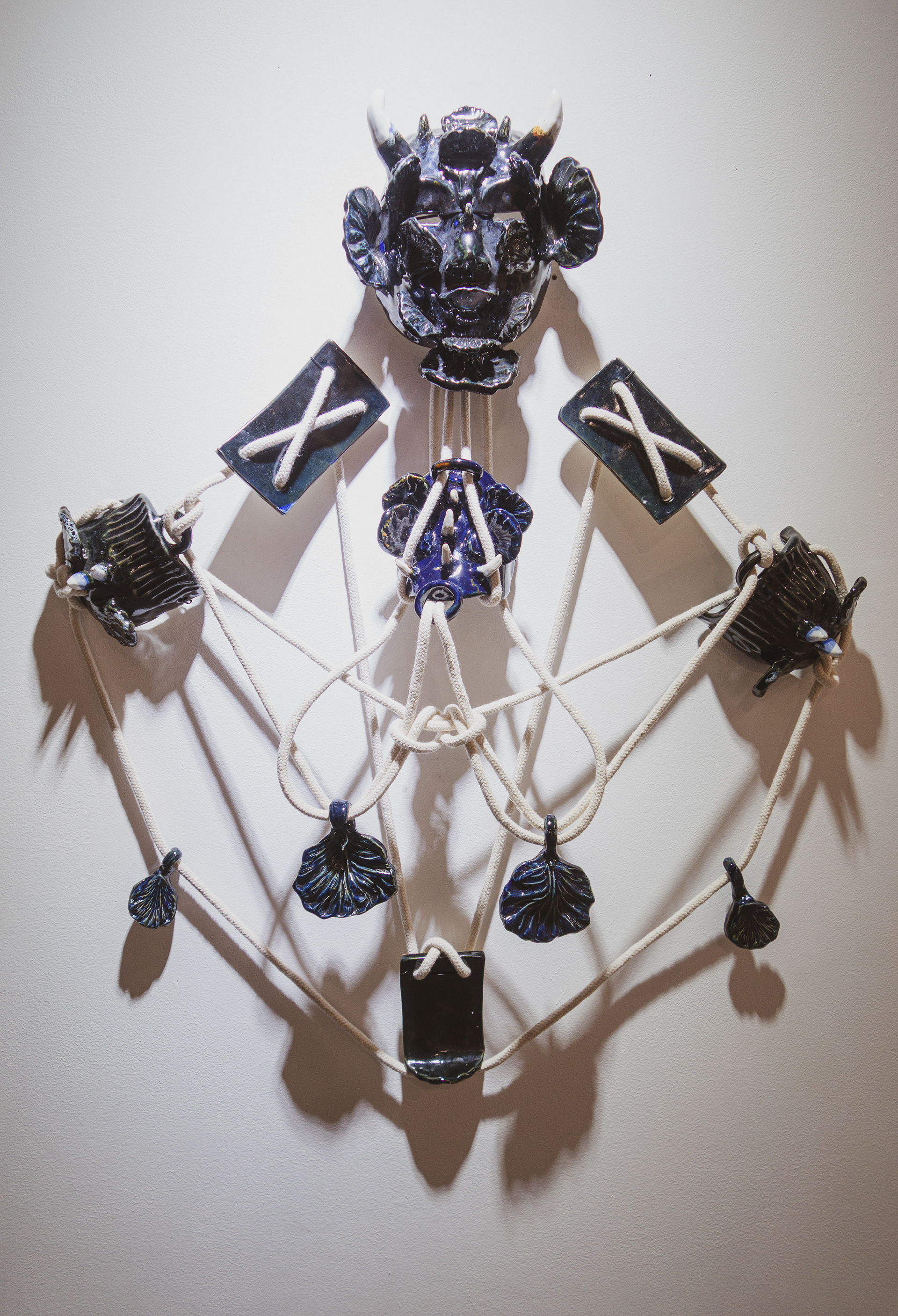
Ensemble de pièces en céramique, modelées et émaillées, corde de Shibari, 75 x 22 x 120 cm, 2026.
Images issues de l'exposition Transformat, curation Cyril Pyrros et Valentin Huby, Le Shakirail, Paris 18e, du 9 au 12 avril 2026.
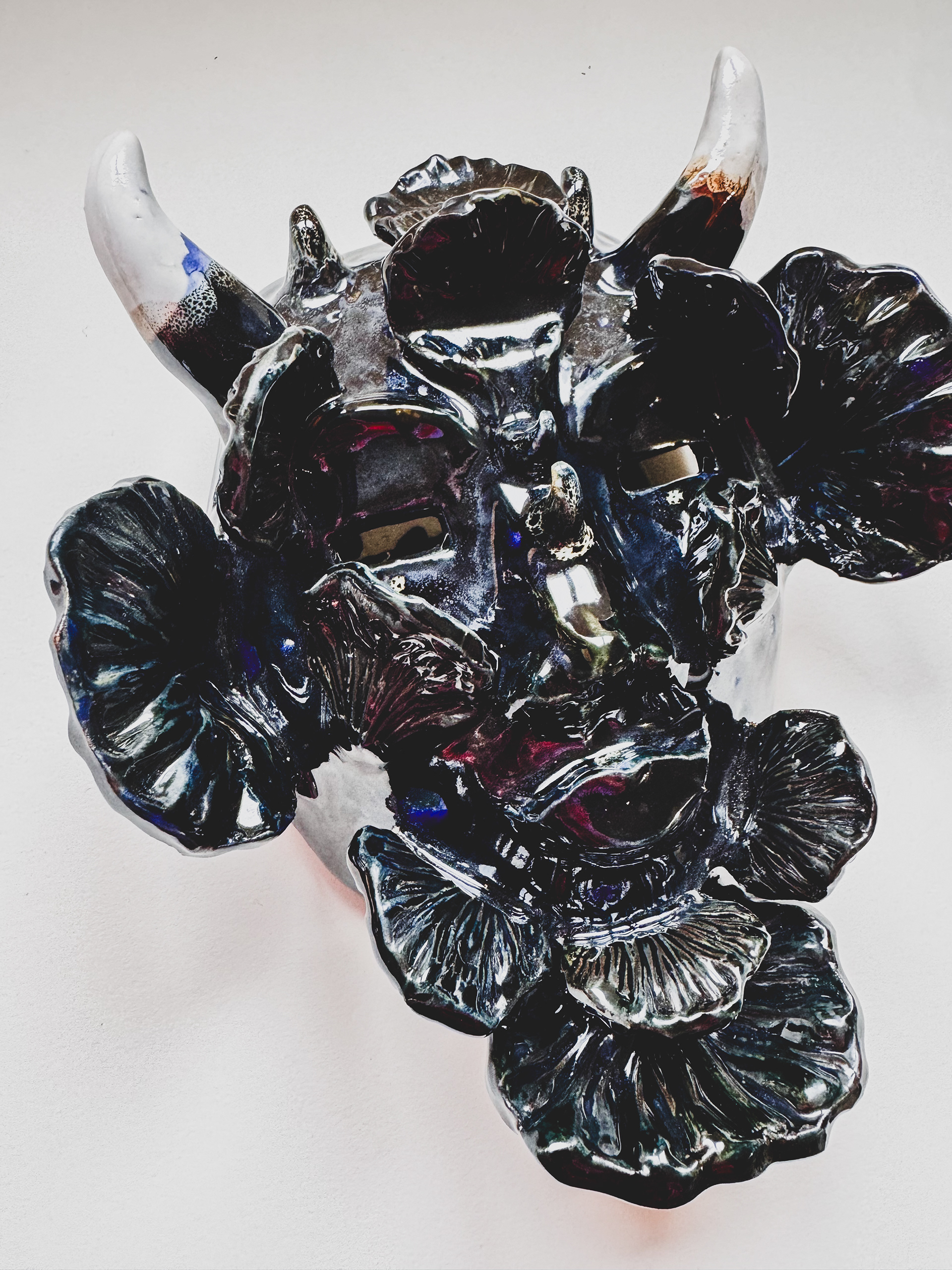
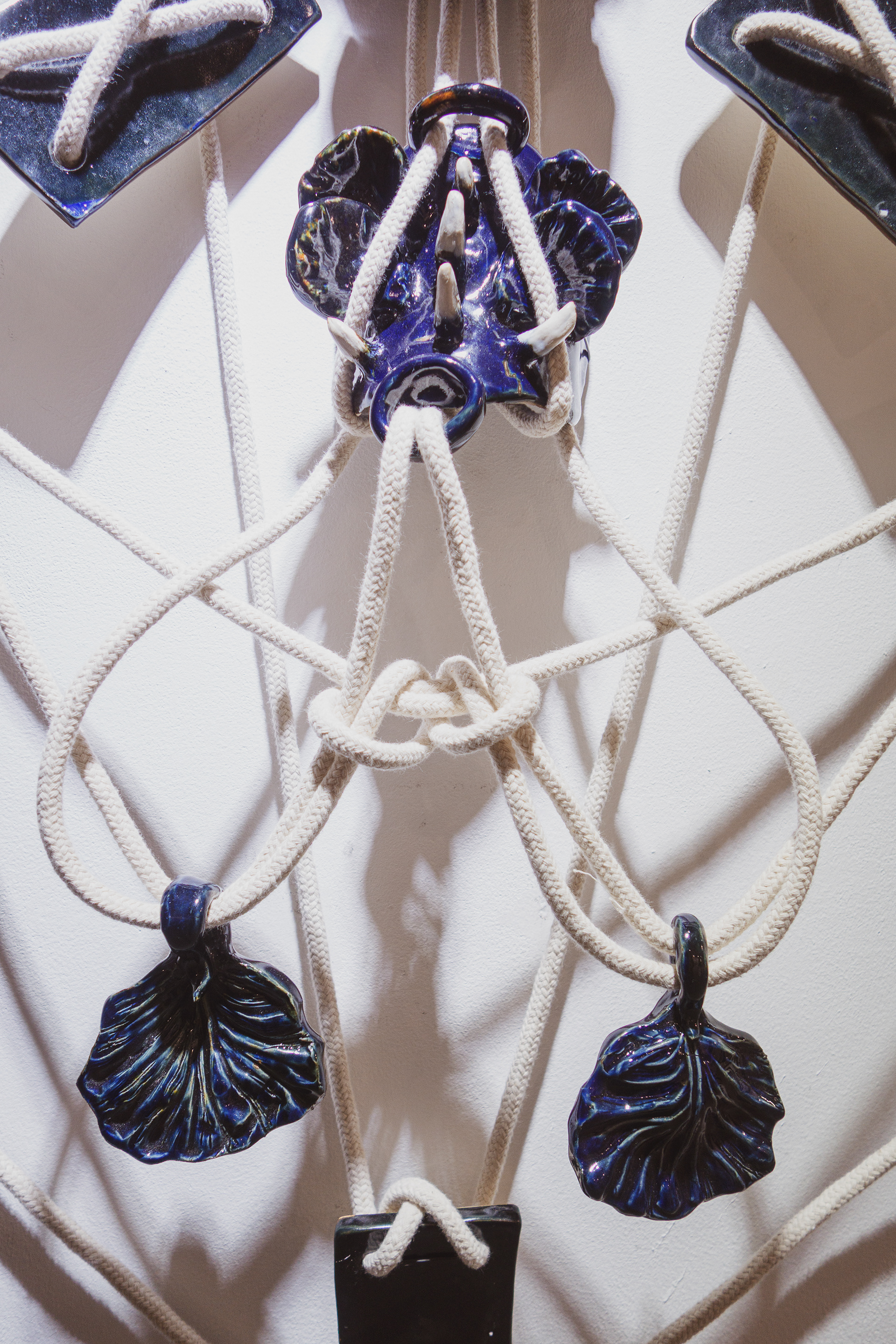
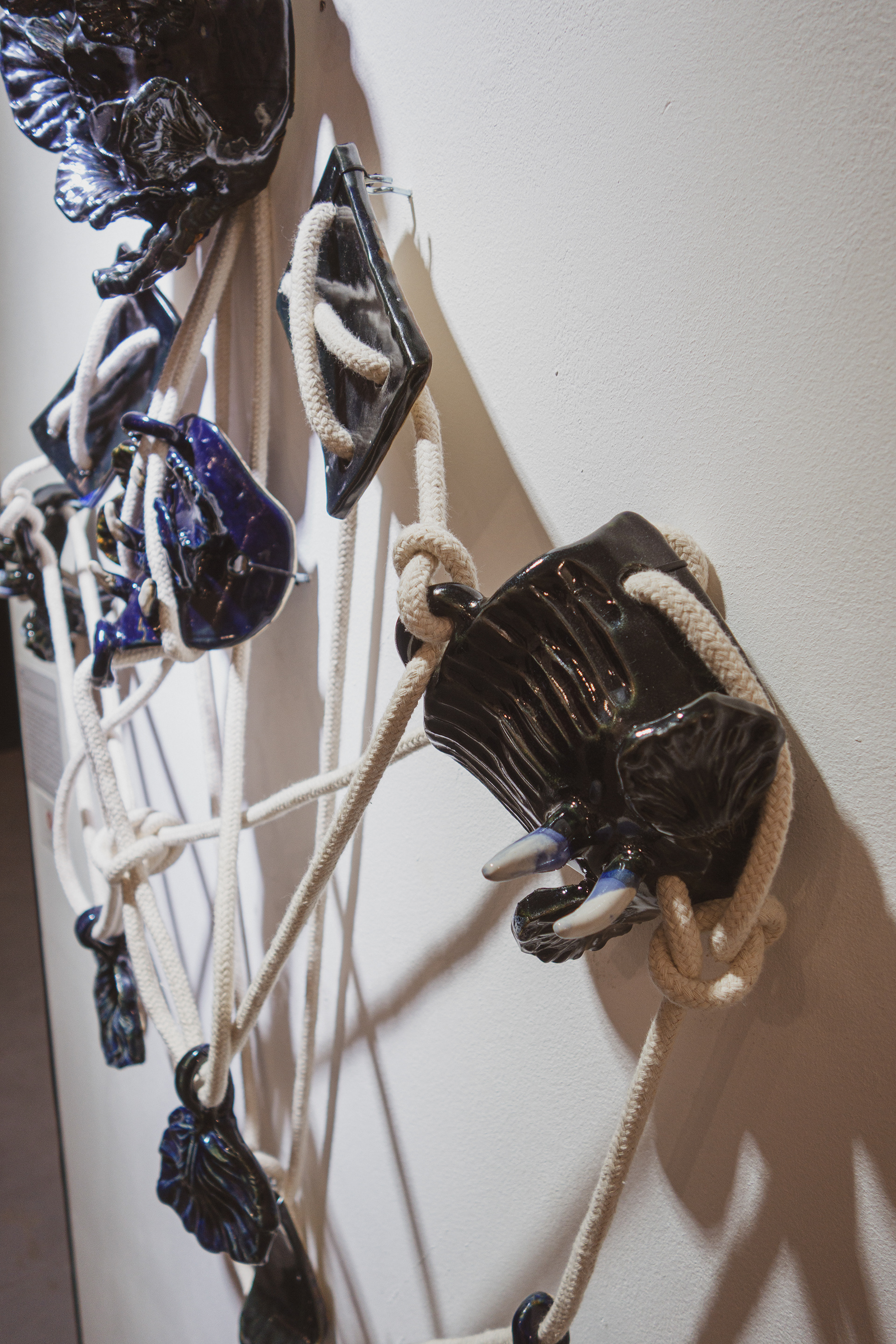
This installation proposes to interrogate our relationship to the living — not as a bond to be repaired or optimized, but as a relationship that can never be fully mastered.
Biophilia is a concept theorized in 1984 by Edward O. Wilson, who put forward the idea that humans innately love nature and seek connection with the living world. I question the anthropocentric dimension of this claim, since nothing suggests that the earth loves us in return, or that it is available to us. Perhaps it is arming itself, patiently waiting to cover us over. The Shibari rope that binds the pieces together here does not tie in order to master: it connects in order to hold together two vulnerable bodies, human and earthly, which continue to affect one another without ever possessing each other. The armor's elements are made of ceramic, hand-modeled and glazed. Nothing here is useful in the sense of an armor that would protect or attack: when worn, it defends nothing — rather, it exposes a body that accepts being affected, damaged, traversed. The whole is as much vestige as beginning. Borrowing from different traditions — from the samurai of Japan, to the Bulgarian kukeri, to the hybrid woodland creatures of my Auvergne childhood — this work is a declaration of love to ecofeminist theories, where desire, respect for the living, vulnerability, and struggle are intertwined.